
A morning routine checklist your child can follow

If your mornings sound like a loop of “teeth?”, “shoes?”, “have you got your bag?”, you are in good company. A lot of parents of school-age kids describe the same thing: the child knows the routine perfectly well. They just don’t start it until someone says so. Then they wait for the next prompt.
It’s tiring, and it can leave you feeling like a broken record before 8 a.m. One idea many families find worth trying is simple: move the reminder out of your voice and onto a list your child can see. The list does the asking. You get to be the person who notices when it’s done.
Here is how to set one up this week.
Why a list can work better than a reminder
When the next step only lives in your head, your child has to wait for you to say it. When it lives on a list at their eye level, they can check it themselves. That small shift changes the question from “what is Mom or Dad going to tell me next?” to “what’s next on my list?”
It won’t make every morning smooth. Some days will still go sideways, and that is normal. But it gives your child something to look at other than you, and it gives you a calmer line to use: “Check your list.”
Step 1: Write down what actually happens
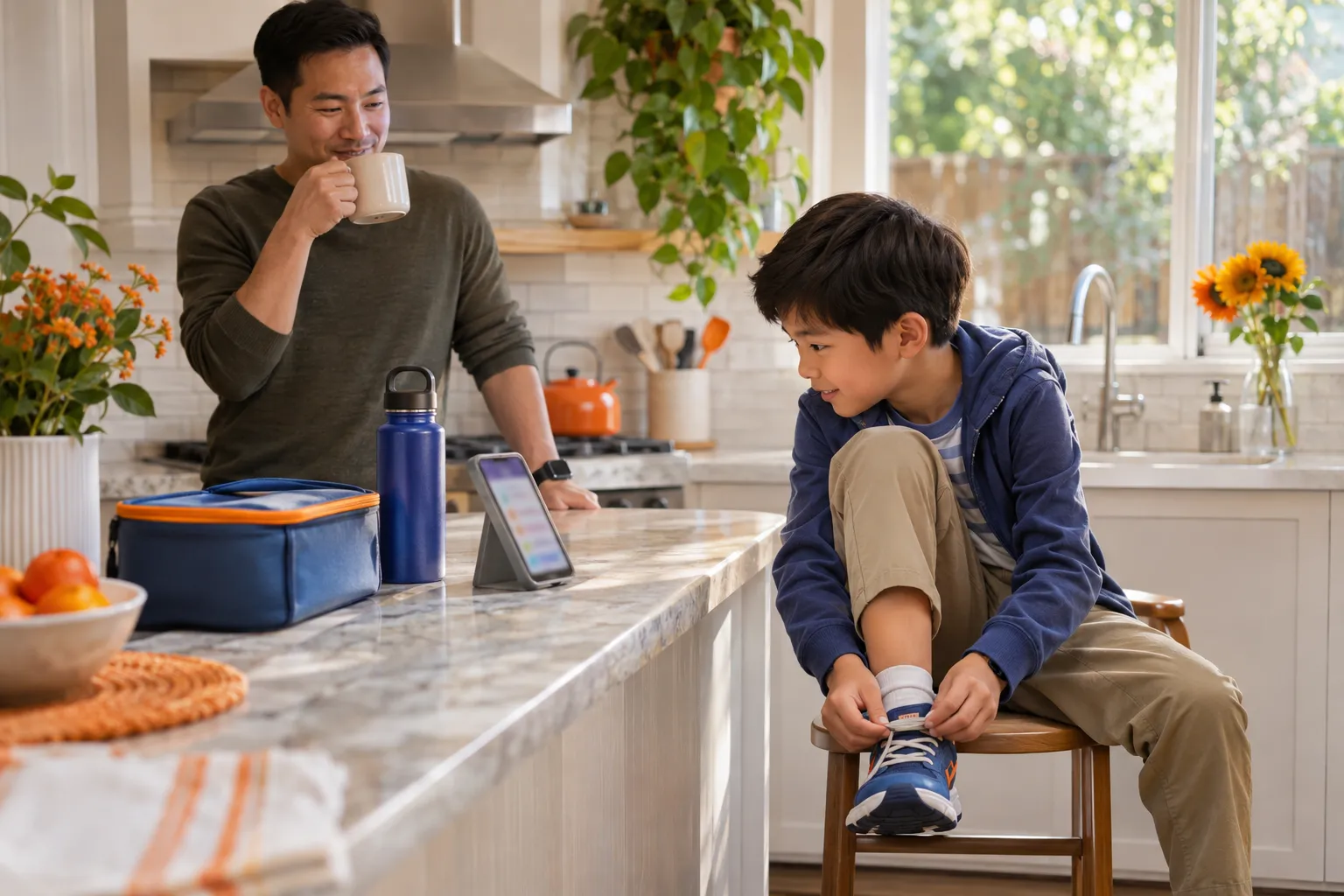
Before you make anything, spend one morning just noticing. What does your child need to do between waking up and walking out the door? Write it in the order it really happens in your house, not the order you wish it happened.
For many families it looks something like this:
- Get out of bed
- Use the toilet and wash hands
- Get dressed
- Eat breakfast
- Brush teeth
- Shoes on, bag by the door
If your list has twelve items, that’s fine for now. You’ll trim it in the next step.
Step 2: Keep it short
A list your child can hold in their head is more useful than a complete one. Aim for four to six steps. Combine small things (“teeth and face”) and leave out anything you’re happy to keep doing yourself for now, like packing lunch.
If you have more than one child, give each their own list. Their mornings are probably different, and having your own list feels better than sharing one. There’s no need to compare who finished first.
Step 3: Use pictures, not just words
Even confident readers find pictures faster first thing in the morning. A small drawing or icon next to each step lets your child scan the list in a second. Younger kids can draw the pictures themselves, which also gives them a sense that the list belongs to them.
Step 4: Make it together
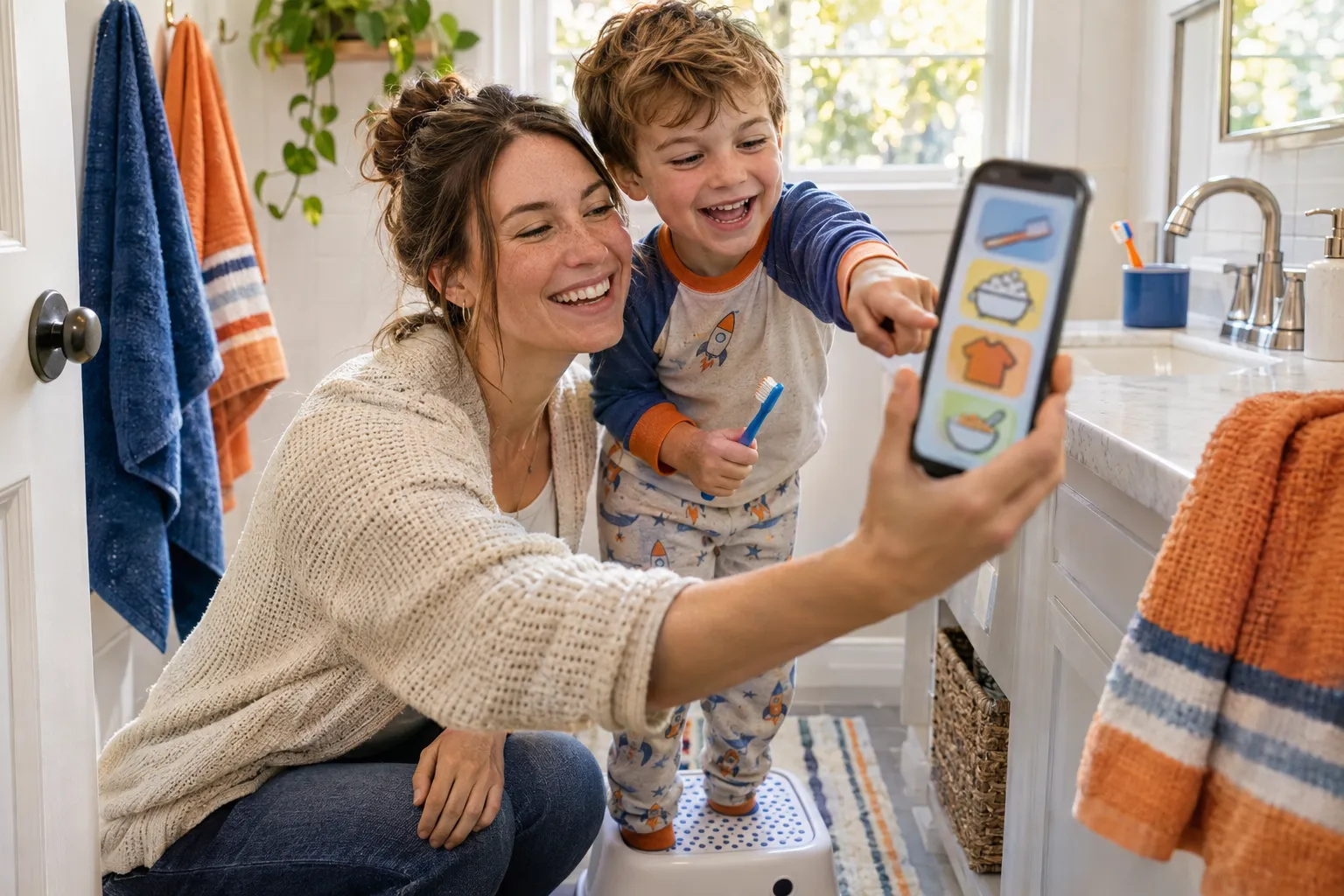
Parents often say that charts they made alone got ignored within a week, while ones their kids helped make lasted longer. Sit down for ten minutes on a weekend. Ask your child what they think the morning steps are. You might be surprised that they already know most of them.
Let them choose the order where it doesn’t matter (dressed first or breakfast first?), pick the colors and stick it where they want it. The bathroom door, the fridge and the back of the bedroom door are all popular spots.
Step 5: Practice once when nobody is in a hurry
Try the list on a relaxed morning first, like a Saturday. Walk through it together, tick each step, and talk about anything that felt awkward. Maybe the toothbrush is too high, or the school jumper is never where it should be. Fix those small things before the first school day.
Step 6: Change your words
On school mornings, try swapping the specific reminder for a pointer to the list:
- Instead of “Go and brush your teeth”, try “What’s next on your list?”
- Instead of “You still haven’t got your shoes on”, try “Show me where you’re up to.”
- When a step is done, notice it out loud: “You did teeth without me asking.”
It can feel strange at first, and you may need to say “check your list” a few times a morning for a while. That’s still a different conversation from repeating every single step.
Step 7: Check in at the end, not all the way through
Agree on a moment to look at the list together, maybe at the door or in the car. Look at what got ticked, say thank you, and leave the rest for tomorrow. Some families add a small weekly moment, like choosing Friday’s breakfast, but the check-in itself is the main thing.
When it stops working
Most lists fade after a while. That isn’t failure, it’s a sign it’s time for a refresh:
- The list is too long. Cut it back to the steps that still need a nudge.
- The steps changed. A new school, a new club or a new sibling can shift the whole morning.
- It became background. Move it, redraw it, or let your child redesign it.
- Some days are just hard. Tiredness, illness and big feelings happen. Help out, and try the list again tomorrow.
Where Capakido fits
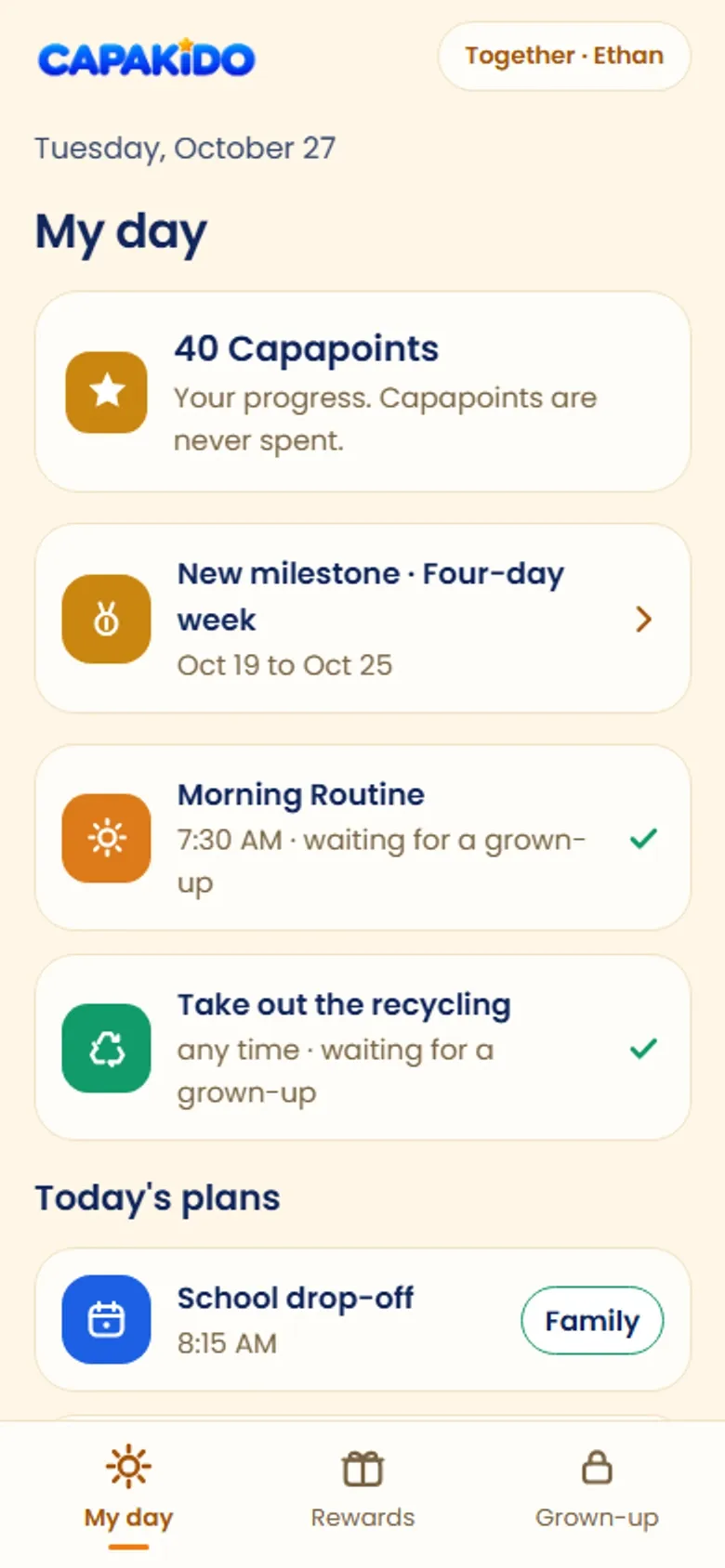
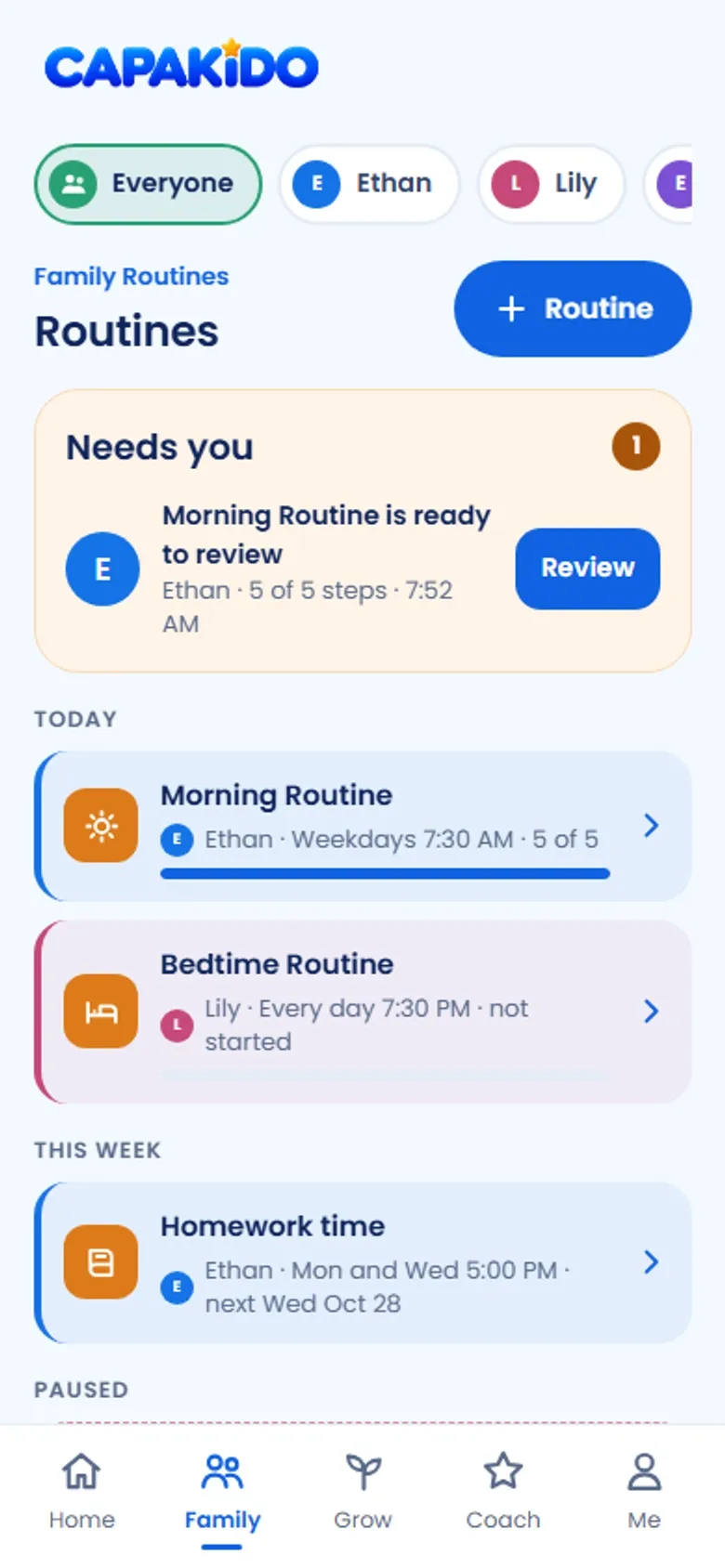
Morning lists are one of the reasons we made Capakido. In Family OS, which is free, you set up a Routine and your child follows it step by step in Together Mode on your phone or the family tablet. Kids don’t get their own login.
When a Routine is done, it waits for a grown-up. An adult confirms it before any Capapoints or Capacoins are added. Capapoints show progress over time and are never spent, while Capacoins can go toward family rewards that you set.
You don’t need an app to start, though. A sheet of paper, a pen and ten minutes with your child is enough for this week.