
Doing it with them, not for them: teaching one life skill at a time

There’s a moment most parents know well. Your child is slowly buttering toast, butter is going everywhere, you’re already late, and you hear yourself say, “Here, let me do it.” It’s quicker. It’s tidier. And tomorrow, you’ll probably do it again.
There’s nothing wrong with that on a busy morning. But if you’d like your child to take over a few everyday jobs, it helps to have a plan for the moments when you do have time. The idea is simple: do it with them first, then gradually step back.
Why “with” matters
Telling a child how to do something and doing it next to them are quite different experiences. When you work side by side, they see the small steps you no longer notice yourself: where the knife goes, how much milk is enough, what to wipe up at the end. They can ask questions in the moment, and you can see what’s tricky for them.
Many parents also say it simply feels nicer. Teaching together can turn a job into a bit of time together, rather than one more instruction.
The four steps: I do, we do, you do, you own
This is a common way to hand over a skill a little at a time. Picture the work slowly sliding from you to your child.
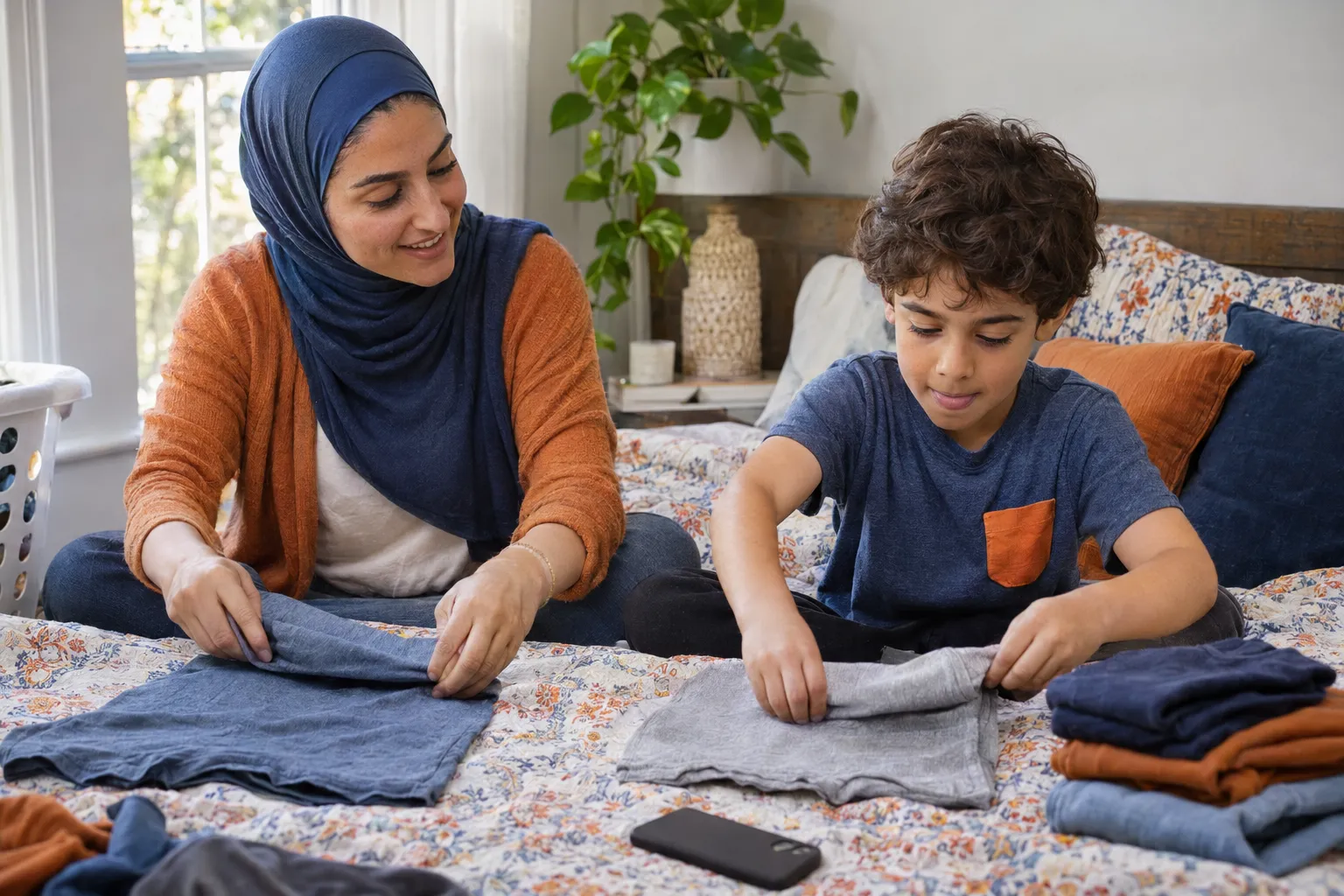
- I do. You do the task while your child watches. Talk through each step out loud, even the obvious ones.
- We do. You do it together. Your child takes over some steps while you handle the rest.
- You do. Your child does the whole task. You stay nearby and only step in if they ask, or if something isn’t safe.
- You own. It becomes their job. You check in now and then, and notice when it’s done.
There’s no set timetable. A child might move through all four steps for pouring cereal in a few days, and take months with something like packing a sports bag.
A worked example: making a simple sandwich
Here’s how the four steps might look for a cold snack, which keeps hot appliances and sharp knives out of the picture for now.
I do. On a slow afternoon, make a sandwich while your child watches. Say what you’re doing: “First I get two slices of bread. I put them on the board, not straight on the counter. I use the round knife for spreading.”
We do. Next time, set out everything together. Your child spreads, you add the filling. Or they add the filling and you close and cut it. Keep the steps you take on the tricky parts.
You do. Now your child makes the whole sandwich while you sit at the table nearby. Resist the urge to fix the uneven butter. If they get stuck, ask a question rather than taking over: “What do you think comes next?”
You own. “Making your own snack” can now be one of their jobs on certain days. You might still check the kitchen is tidy afterward, and say thanks when it is.
Tips that make it easier
- Choose your moment. Teach when nobody is hungry, tired or in a rush. Weekends and school breaks are usually easier than school mornings.
- Break it into small steps. If a skill feels big, write the steps down. A short list of four or five steps is easier to follow than one long instruction.
- Expect mess. Spills and lopsided results are part of learning. Put a cloth within reach and keep your expectations relaxed.
- Ask, don’t fix. When something goes wrong, a question (“What could we try?”) keeps the job in their hands.
- Name the effort. “You remembered to put the lid back on” means more than a general “good job”.
- Step back one stage if needed. If “you do” isn’t going well, go back to “we do” for a while. That’s normal.
Make practice a small, regular slot
Skills tend to settle with short, regular practice more than one big lesson. Pick a few times in the week when you can repeat the same skill for ten minutes or so. It doesn’t need to be daily.
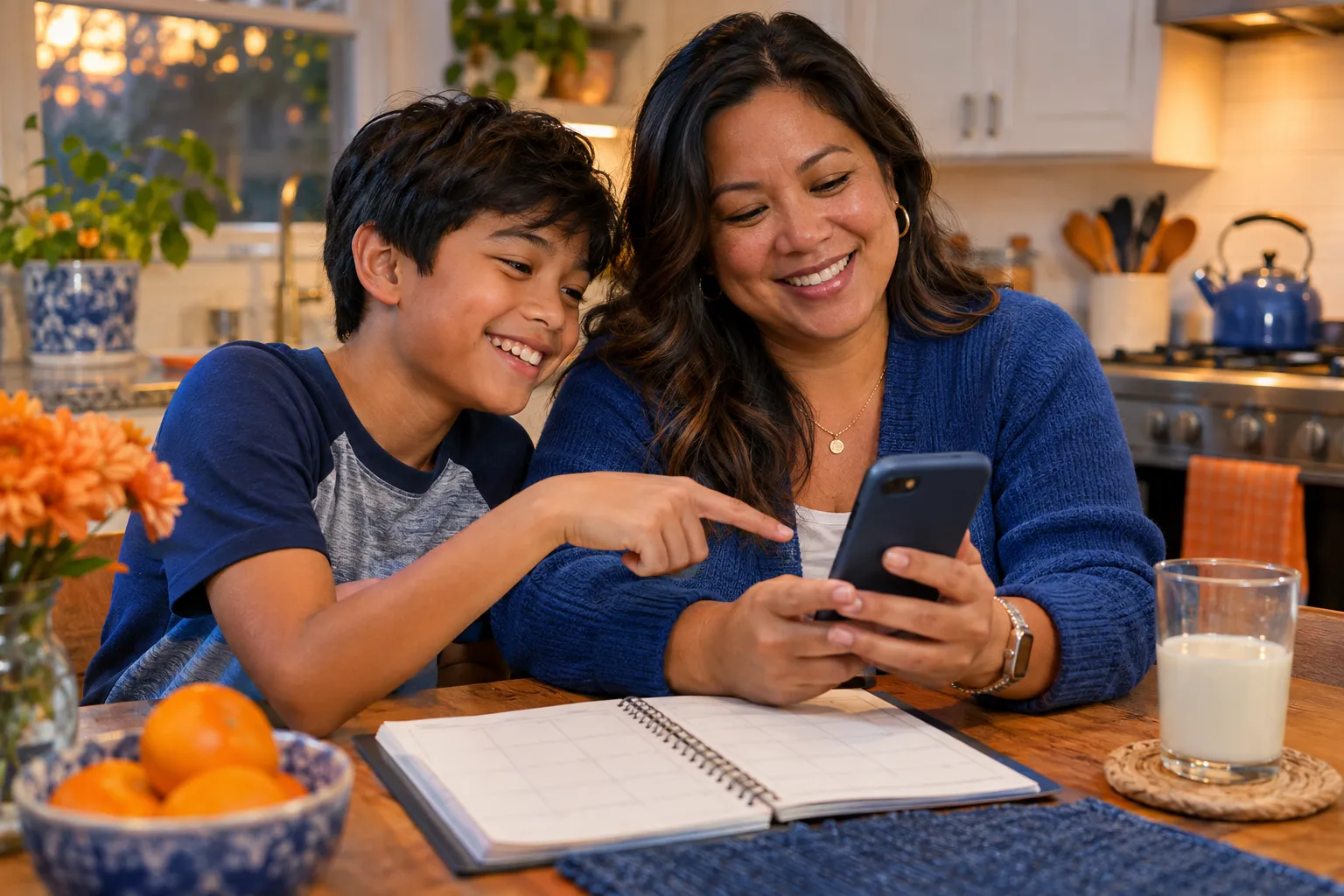
A simple one-week plan might look like this:
- Monday: I do. Your child watches and asks questions.
- Wednesday: We do. Share the steps.
- Friday: You do. Your child tries the whole thing with you nearby.
- Sunday: Talk about how it went and decide together whether to keep practicing or move it to “you own”.
If the week doesn’t go to plan, just carry on the next week. There’s no rush.
Keeping it fair between siblings
If you have more than one child, they’ll often be at different stages with different skills, and that’s fine. Try to avoid comparing (“Your brother could do this at your age”). Each child can have their own skill to work on and their own pace.
Where Capakido fits
Capakido is built to help families do more of this together. In Family OS, which is free, you set up responsibilities and routines that a child follows with you in Together Mode on your device. Kids don’t have their own login, and an adult confirms every reward.
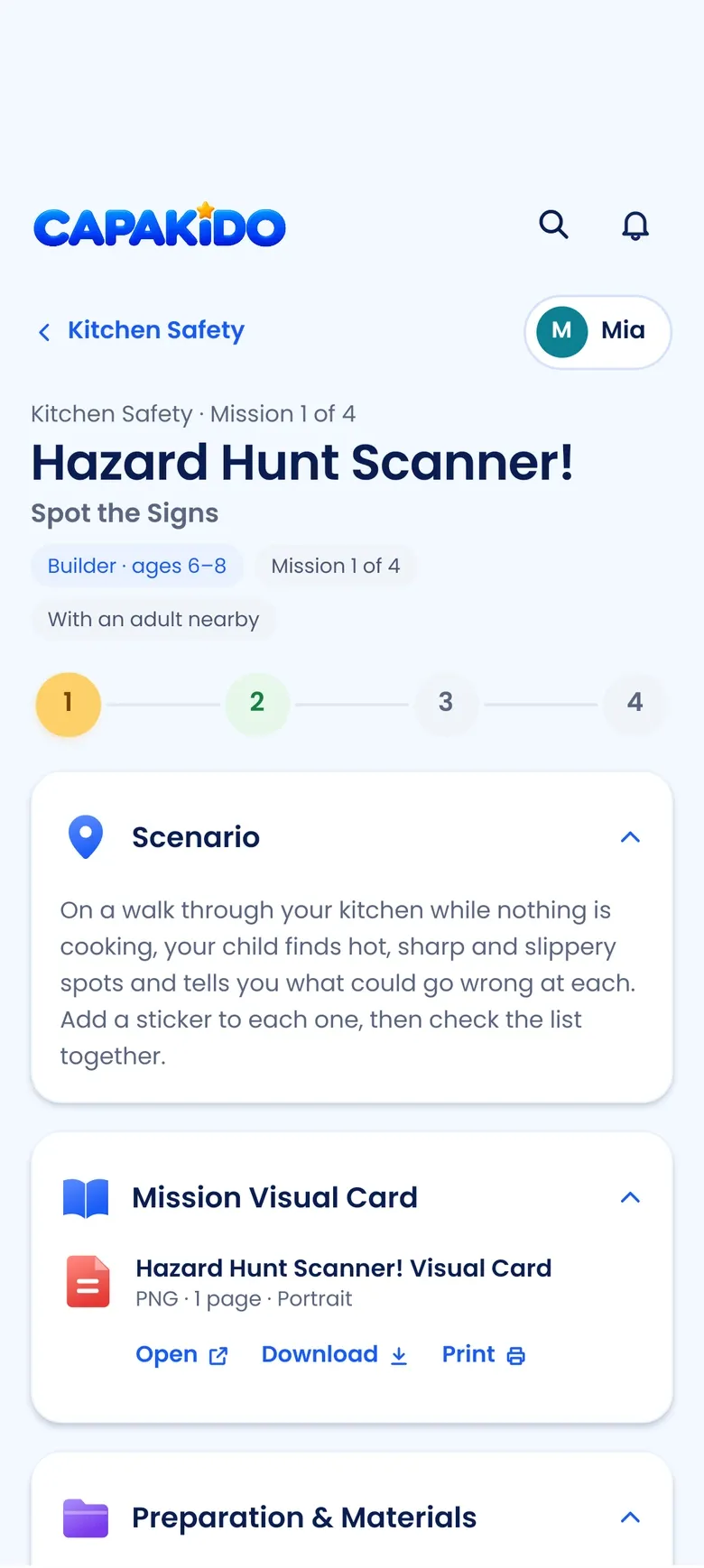
Grow membership adds Life Readiness: a Roadmap for each child with short Lessons and real-life Missions built around this kind of side-by-side practice. Each Mission comes with a printable Visual Card, and you review how it went together afterward.
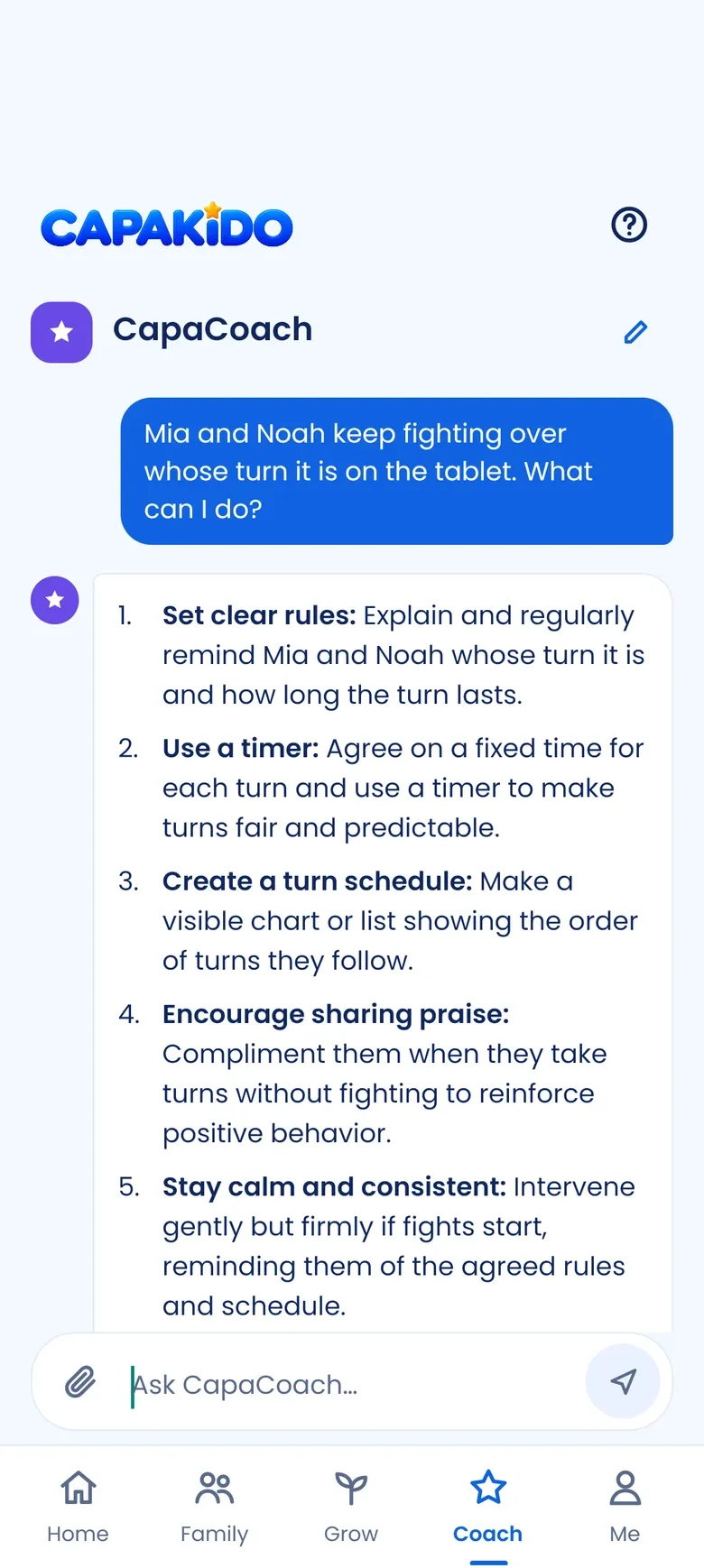
Members also get CapaCoach, a space for parents to talk through everyday questions as they come up.
Whether or not you use an app, the method is the same: pick one small skill, choose a quiet moment this week, and start with “I do”.