
What can my child do on their own? Everyday skill ideas for ages 6 to 12

“How much should I be expecting of an eight-year-old?” It’s one of those questions parents ask quietly, often after seeing another family’s child pour their own cereal or walk to a friend’s house. Then comes the second thought: “Have I been doing too much for them?”
If that sounds familiar, take a breath. Many of us do things for our kids simply because it’s faster. Getting out the door on time matters, and doing it yourself is quicker than teaching. That’s not a failing. It just means there may be a few skills sitting there, ready to be handed over, whenever you have the time.
This post isn’t a list of milestones or a test your child has to pass. Children grow at very different speeds, and you know your child, your home and your neighbourhood far better than any list does. Think of what follows as a menu of ideas to look at together.
Start with what your child already does
Before looking at any list, spend a few days noticing. What does your child already do without help? What do they do with a reminder? What do they do only when you do most of it with them?
You’ll probably find three groups:
- Already theirs. Things they do on their own most days.
- Nearly there. Things they can do but often need a prompt or a hand with.
- Not yet. Things you still do for them.
The “nearly there” group is usually the best place to start. Those skills are close, and a little practice can go a long way.
Four areas to look at
It helps to think about everyday skills in a few simple areas rather than one long list.
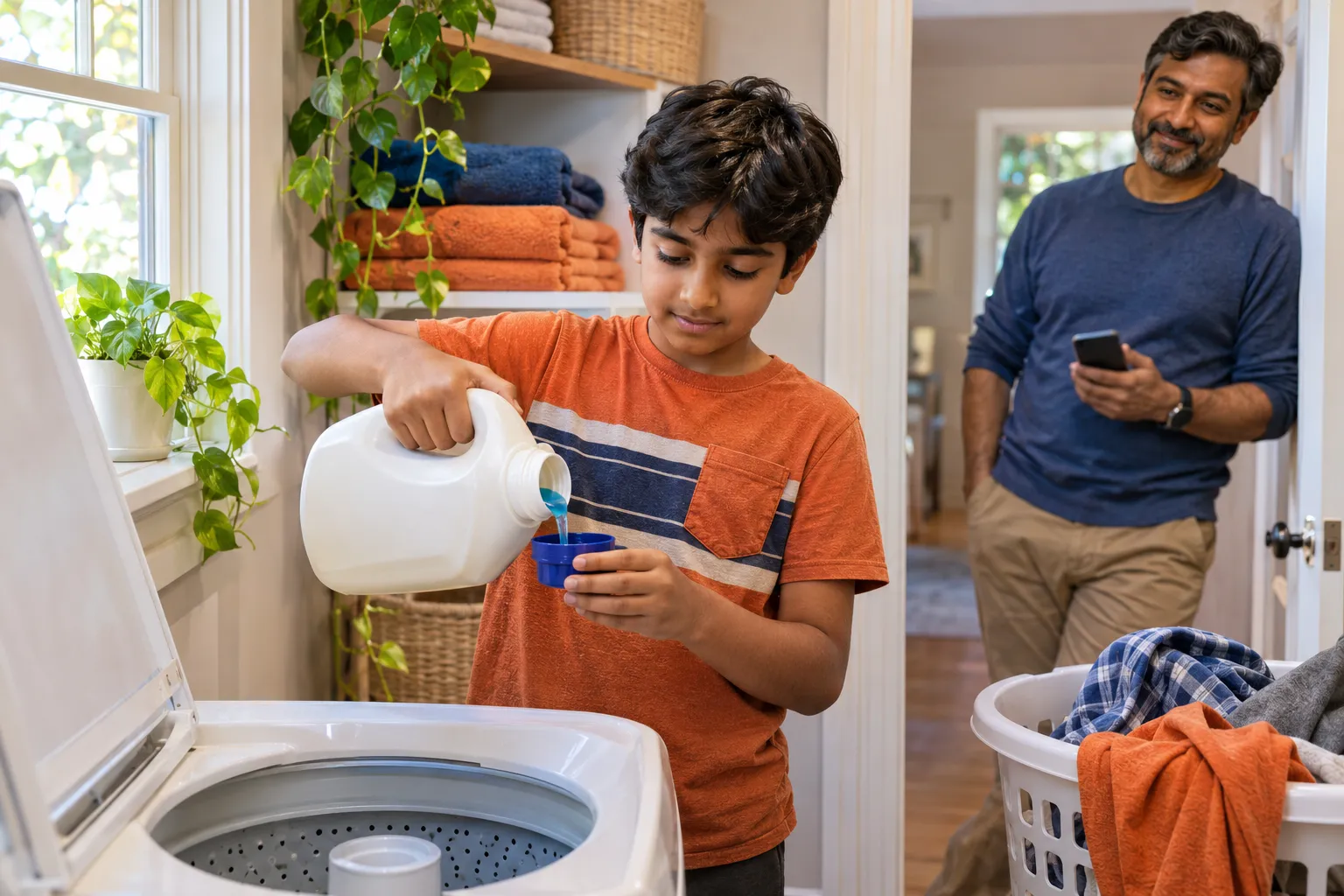
Self-care
- Brushing teeth and washing hands without being reminded each time
- Choosing clothes for the weather and getting dressed
- Packing a school bag from a short list
- Putting dirty clothes in the wash basket
- Later on: setting an alarm, keeping track of their own water bottle and coat
Kitchen
- Pouring a drink and getting a simple breakfast like cereal or toast
- Clearing their own plate and wiping up small spills
- Helping to wash fruit and vegetables
- Making a simple cold snack or sandwich
- Later on, with an adult close by: following a short recipe, using the toaster or microwave, and in time, simple cooking on the hob while you stay in the kitchen
Home
- Making their bed in a simple way
- Tidying toys back where they live
- Feeding a pet, with a check from you
- Sorting laundry into colors, folding small items, matching socks
- Later on: loading the dishwasher, taking out the recycling, hoovering a room
Out and about
- Knowing their address and a parent’s phone number
- Ordering for themselves in a café
- Finding items on a short shopping list in the shop while you’re nearby
- Paying at a till and checking the change
- Later on: short trips that you decide are right for your child and your area
Notice that nothing here has an age next to it. A six-year-old in one family may happily make toast while a ten-year-old in another hasn’t tried yet, and both are fine. Where safety is involved, like hot appliances, sharp knives or roads, you decide when your child is ready, and an adult stays close until then.
Pick one skill, not ten
Once you’ve looked through the list, choose one skill from the “nearly there” group. Just one. It’s tempting to hand over five jobs at once, especially after a frustrating week, but one skill practiced well tends to stick better than five that get dropped.
A few questions can help you choose:
- Does your child want to learn it? Interest makes everything easier.
- Does it happen often? Daily skills get more practice.
- Is it low stakes? Pouring a drink is a better first try than packing for a trip.
Watch, help, try, own
Most skills can be handed over in four small stages. Move at your child’s pace. Some skills take a weekend, others take a term.
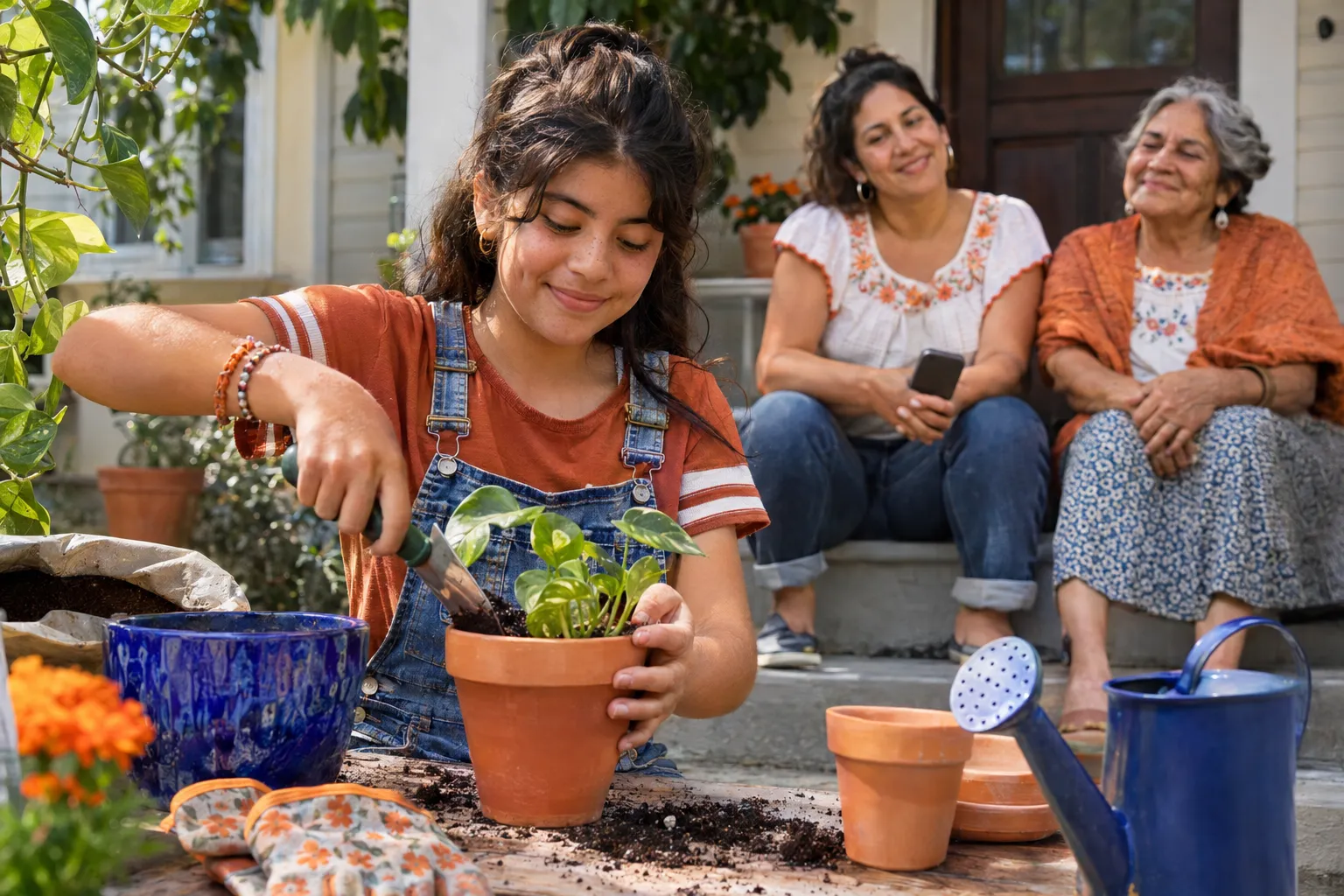
- Watch. Your child watches you do it while you talk through each step out loud.
- Help. You do it together. They take one or two steps, you do the rest.
- Try. They do the whole thing while you stay close. You help only if they ask or if something isn’t safe.
- Own. It becomes their job. You check in now and then and say thanks.
If a stage goes badly, step back one stage. That’s part of learning, not a sign it isn’t working.
Keep the tone kind
Some parents worry that asking more of their child will feel like pressure, and that home should be a soft place to land. Both can be true. Learning to pour your own drink or pack your own bag can be a moment of pride rather than a chore, especially when you notice the effort: “You remembered your PE kit by yourself.”
It also helps to agree with any other adults in the house. A skill tends to settle faster when everyone gives the same small nudge and the same thanks.
Where Capakido fits
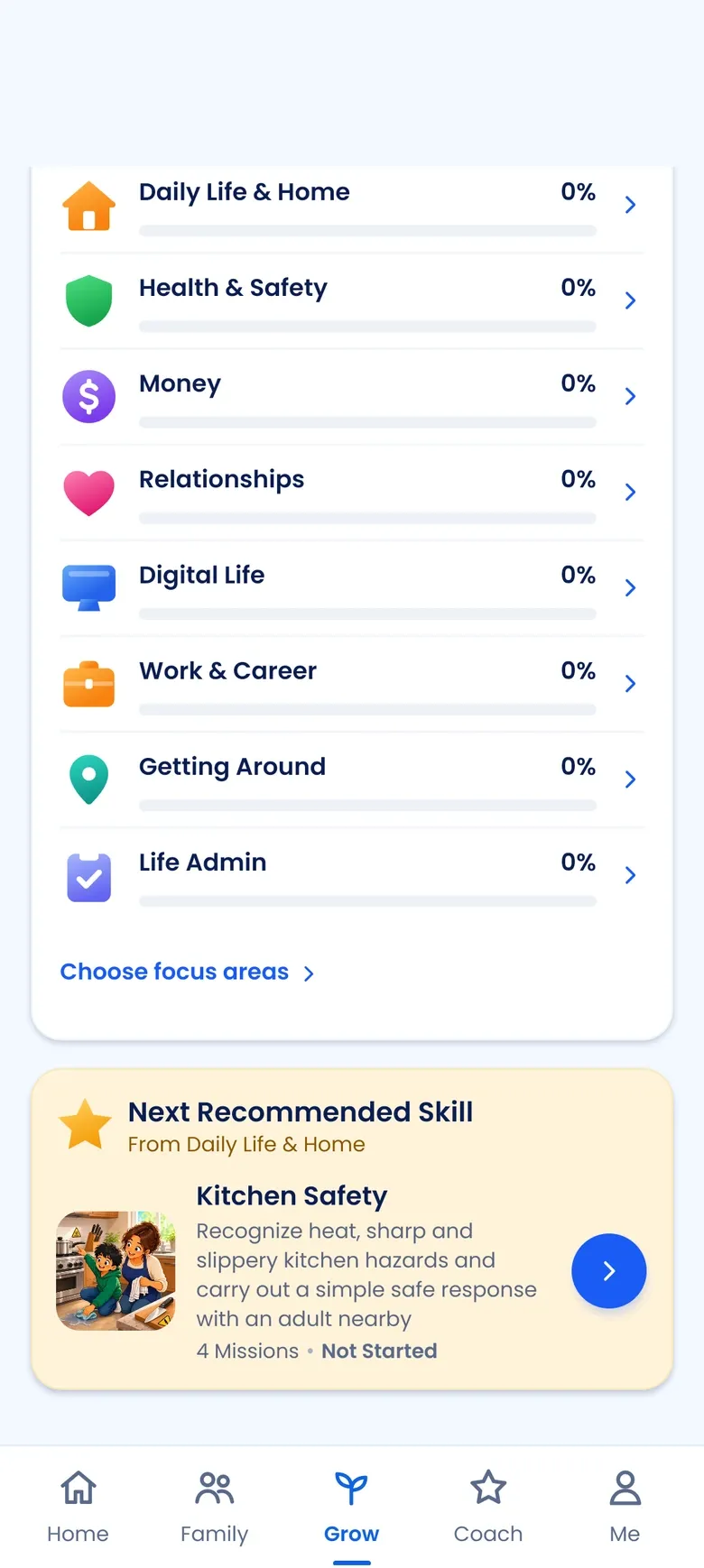
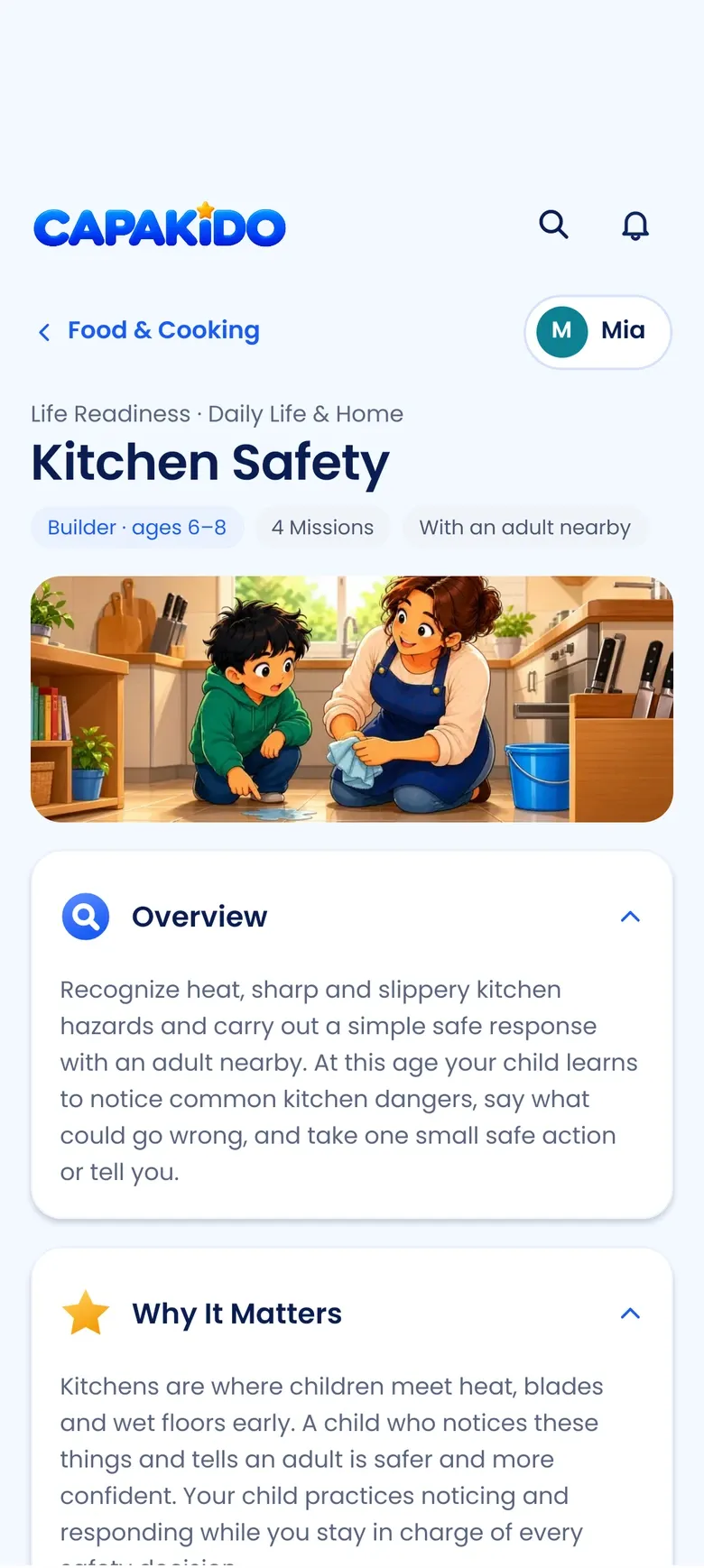
Alongside the free Family OS, Capakido’s Grow membership includes Life Readiness: a Roadmap of everyday skills across eight areas of life, from Daily Life & Home to Getting Around. Each skill has a short Lesson to learn about it and Missions to practice it together in real life.
Children use Capakido with a parent in Together Mode on the parent’s device, and an adult reviews and confirms each finished Mission. Members also get CapaCoach, a space for parents to think through everyday questions like the ones in this post.
You can also start with nothing more than a notebook and the three groups above. Pick one skill this week and see how it goes.